

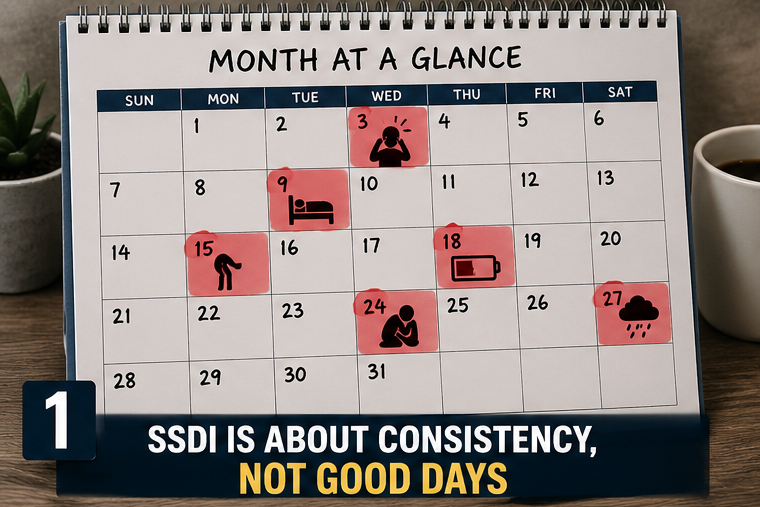
One of the most misunderstood aspects of SSDI law is how Social Security evaluates your ability to function over time. Many applicants believe they must prove they are completely incapacitated every single day.
That is not the legal standard.
SSA is not asking whether you can function sometimes. It is asking whether you can function consistently enough to sustain full-time work.
This is where the concept of bad days becomes critical.
The Legal Standard Is Consistency, Not Perfection
SSA defines disability as the inability to engage in substantial gainful activity on a regular and continuing basis. That means:
- Eight hours a day
- Five days a week
- Or an equivalent full-time schedule
If your condition prevents that level of consistency, you may qualify for SSDI even if you have occasional good days.
Why Bad Days Carry More Weight Than Good Days
In real workplaces:
- Employers expect consistent attendance
- Tasks must be completed on schedule
- Productivity must be predictable
Even two to three bad days per month can lead to termination in most jobs. If your condition causes:
- Frequent flare-ups
- Unpredictable symptoms
- Extended recovery periods
then your worst days define your ability to work.
How SSA Evaluates Fluctuating Conditions
SSA looks at:
- Frequency of symptom flare-ups
- Duration of bad days
- Severity of limitations during those periods
- Time needed to recover
Conditions like migraines, autoimmune diseases, mental health disorders, and chronic fatigue often fluctuate. The key is proving that the fluctuations themselves make work unreliable.
Common Mistakes Claimants Make
Many applicants unintentionally weaken their case by:
- Focusing on what they can do on good days
- Saying they are “managing”
- Downplaying symptoms to appear responsible
- Failing to describe how often bad days occur
SSA then assumes those good-day abilities are sustainable.
How to Properly Document Bad Days
Strong cases include:
- Symptom journals tracking frequency and severity
- Medical records noting flare patterns
- Statements describing inability to complete daily tasks
- RFC forms that include off-task time and absences
Doctors should describe not just baseline function, but what happens during symptom peaks.
Why This Matters at Hearings
Judges often focus heavily on consistency. When testimony clearly explains:
- How often bad days occur
- What happens during those days
- Why recovery time affects scheduling
approval becomes much more likely.
⚖️ Final Takeaway
SSDI is not about whether you can function sometimes. It is about whether you can function reliably.
If your bad days prevent consistent work, they define your disability.
📞 Free SSDI Case Review
📞 Talk to a disability attorney today at Law Office of Irene Ruzin
🧾 We help document fluctuating conditions correctly
💼 No fees unless you win